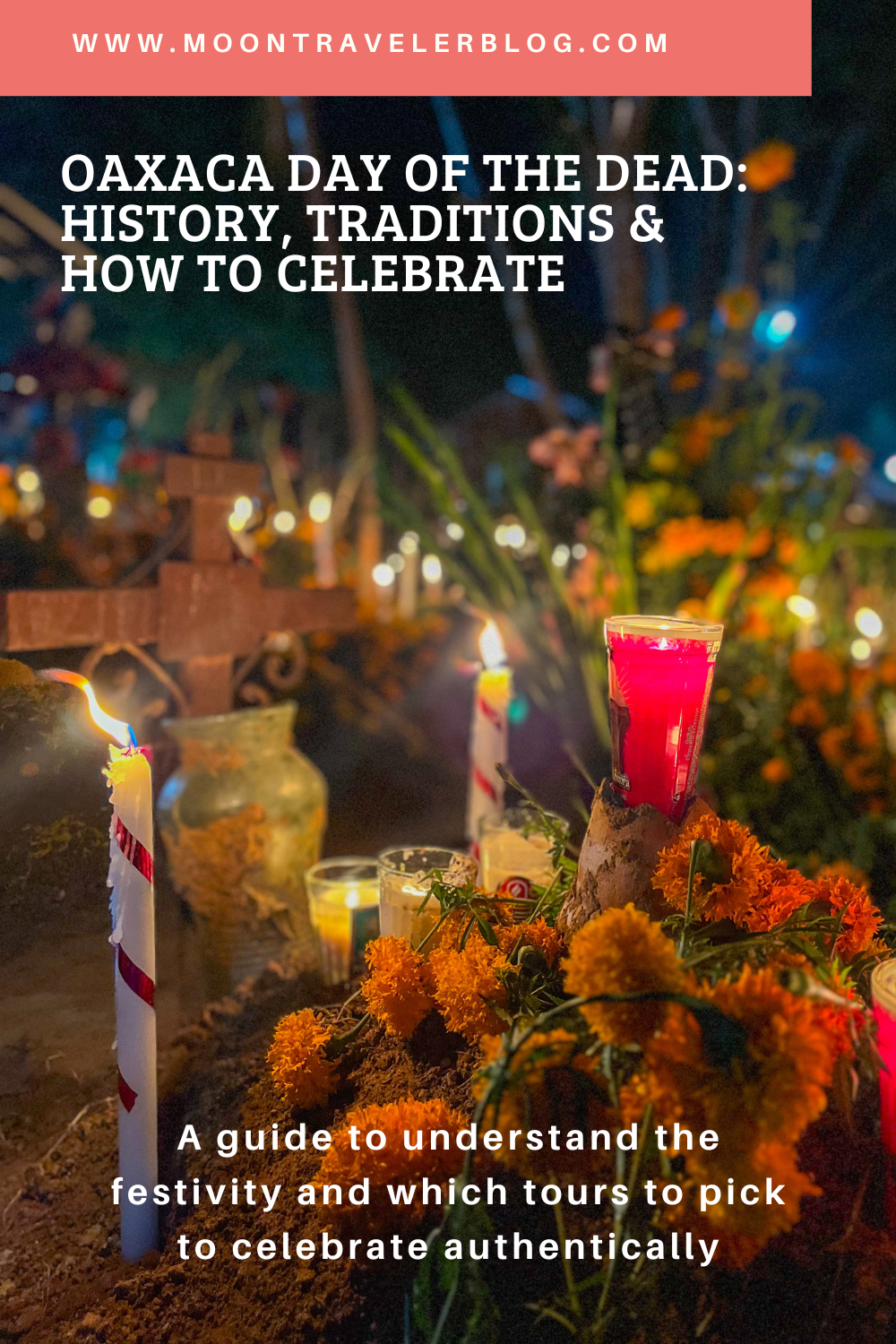
Oaxaca Day of the Dead: History, Traditions & How to Celebrate
If you’ve ever wondered what makes Day of the Dead such a profound and moving celebration, this article is for you. It will help you understand the festival in depth – its history, rituals, and rich traditions – so you can experience it respectfully, whether you visit Oaxaca or other parts of Mexico. Here, you’ll discover the origins of the celebration, the meaning behind its symbols, and the ways communities honor life and death.
Along the way, I’ll share tips and tours to help you immerse yourself in the festivities responsibly, while also supporting local artisans and families who keep these traditions alive. By reading this guide, you’ll gain the knowledge and context to celebrate Día de Muertos with reverence, curiosity, and wonder.
What is Dia de Muertos and When is Celebrated in Mexico
Day of the Dead (Dia de Muertos) is a colorful, multi-day celebration honoring ancestors. It blends indigenous traditions with Catholic practices, reflecting how these customs have endured through centuries of colonial influence. The festivity also marks the harvest season, when communities gather corn, beans, and squash, connecting with the land and life’s cycles.
In Oaxaca, preparations start weeks in advance, as markets fill with mandarins, peanuts, pan de muerto, sugarcane, papel picado, and marigolds. Celebrations officially begin at midnight on October 31st, when the gates of the underworld open, and continue until 3 pm on November 2nd, when spirits return. Children who have passed, called los angelitos, arrive first on November 1st, followed by adult spirits. Altars with marigolds and favorite foods guide them home, and on November 2nd, they return to the underworld until their next visit.
While traditions vary across towns, the purpose is the same: to gather with loved ones, share meals, laugh, reminisce, and welcome back those who have passed.
The Origins and evolution of Dia de Muertos
Dia de Muertos is a tradition that dates back thousands of years to the Aztec, Zapotec, and Toltec civilizations. For these cultures, life and death were deeply connected, and the transition between the two was seen as a natural cycle to honor rather than fear.
The Aztecs honored Mictlantecuhtli, god of the dead, and his wife Mictecacíhuatl, rulers of the underworld, Mictlán. The Zapotecs worshipped Pitao Pezelao and his female counterpart Xonaxi Queculla, also called “Mother Death.”
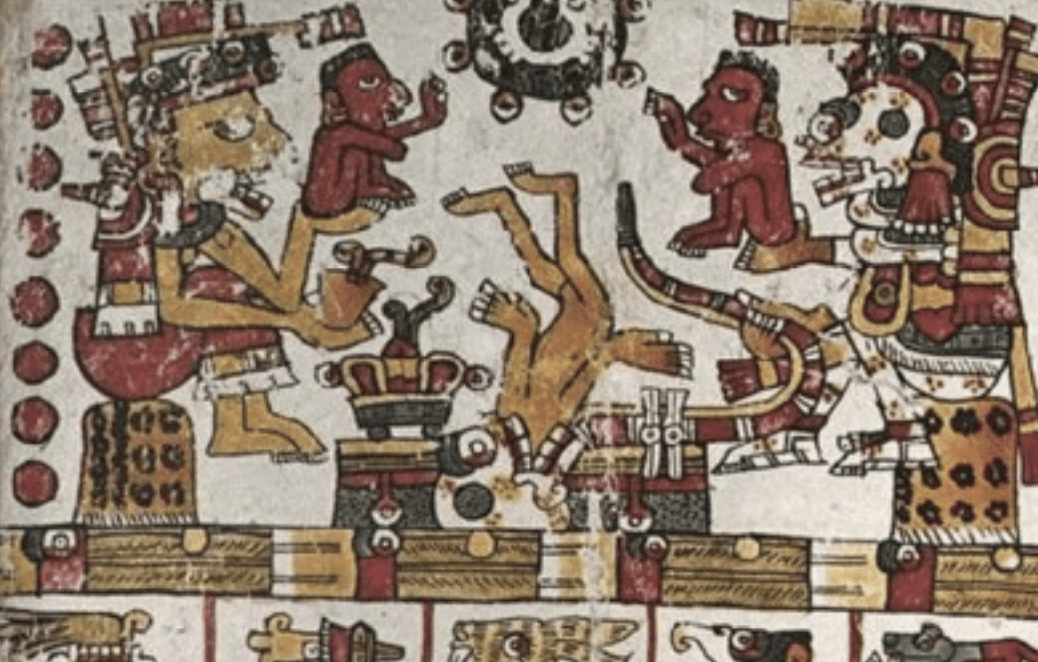
Mictlantecuhtli and Mictecacihuatl, the gods of Mictlán, and the reason for the mouth of the earth, which is devouring the dead, Borgia Codex.
Mesoamerican civilizations believed that when someone dies, their soul embarks on a journey to the underworld, accompanied by deities and sacred animals like jaguars, eagles, and owls, which protect them along the way. Families buried their loved ones with offerings – food, flowers, tools, and even symbolic objects – to help them on this journey and ensure their spirits remained cared for.
Rituals and tombs were carefully designed. The direction the body faced, the location of burial, and the accompanying items all held deep meaning. The presence of ancestors was not only spiritual but social, connecting the living to their heritage and sometimes reinforcing family status.
After the Spanish conquest in 1521, indigenous traditions blended with Catholic practices – what we now call sincretismo – creating the Día de Muertos we know today. Celebrated alongside All Saints’ Day and All Souls’ Day, the holiday combines pre-Hispanic rituals – like offering food and decorations on family altars – with Catholic elements, such as candles and flowers, to guide spirits back home.
In 2005, UNESCO recognized Día de Muertos as an Intangible Cultural Heritage of Humanity. This acknowledgment honors Mexico’s unique traditions for remembering the deceased and ensures that future generations understand the importance of honoring their ancestors. The celebration also resists cultural homogenization, preserving these rich, distinctive practices for years to come
Understanding Death in Mexican Society: Symbols and Traditions
In Mexican culture, death is celebrated through memory and connection. Rituals honor those who have passed, transforming them into ancestors who remain present in daily life. By remembering the dead, we keep them alive in our hearts. From altars to ancient beliefs, this is how Mexicans honor life, memory, and the soul’s journey through rituals and tradition.
The Ofrenda: A Sacred Meeting Place
Central to the holiday are the ofrendas (altars), where families welcome spirits back home. The ofrenda is a sacred space where the living and the dead meet. Each element carries symbolic meaning, guiding and honoring ancestors as they visit from the underworld.
- Arch: Portal for souls from the underworld
- Photos: Keep ancestors present
- Candles: Light their path
- Catrinas: Remind us of life and death’s balance
- Pan de muerto & fruits: Nourish visiting spirits
- Water: Refreshes spirits after their journey
- Favorite foods & liquor: Celebrate life
- Papel picado & marigolds: Add joy and guide spirits
- Copal incense & salt: Purify and protect
- Multiple levels: Represent the journey from life to the underworld
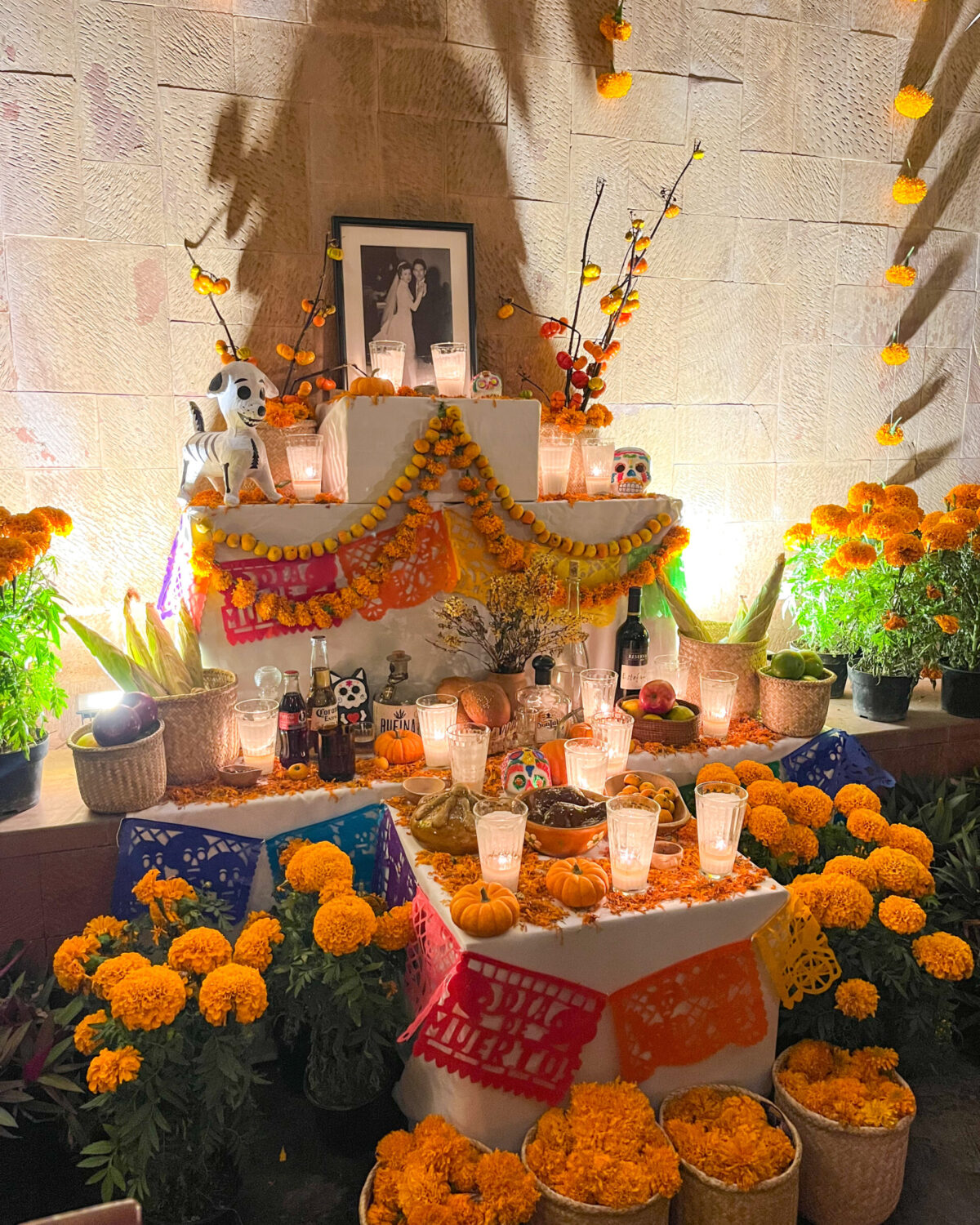
Ofrenda at a local restaurant, Oaxaca
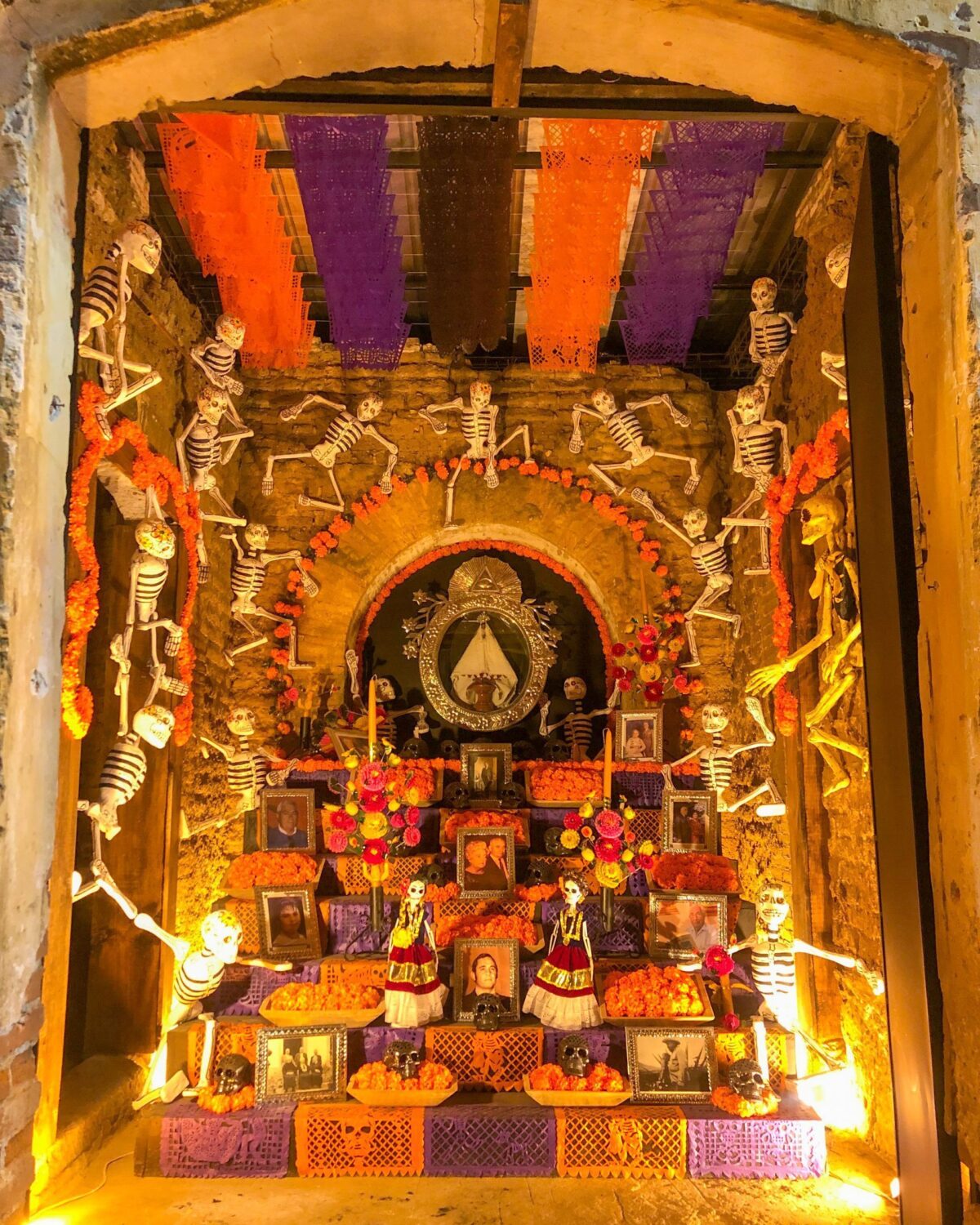
Altar in the neighborhood of Jalatlaco, Oaxaca
The Journey to Mictlán is reflected in the ofrendas’ structure
In ancient belief, Mictlán was the underworld, a place where souls faced nine trials before reaching eternal rest. Today’s altars echo that journey: some with three levels symbolizing Heaven, Earth, and the underworld, others with seven or nine to reflect the stages of passage.
In order to reach their final resting place, the dead had to pass through nine different stages, or “levels.” This journey was believed to last about four years – the same time it takes for the body to fully decompose.

The 9 levels of Mictlán
1. Apanohuaya or Itzcuintlán: A river where Xolotl, the dog god, helps only those who respected dogs in life.
2. Tepectli Monamictlan: Crashing mountains that open and close, allowing passage only at the right moment.
3. Iztepetl: Mountain of knives made of sharp obsidian blades.
4. Izteecayan: Fierce winds and blizzards across eight dangerous peaks.
5. Paniecatacoyan: Violent winds toss bodies like flags before moving forward.
6. Timiminaloayan: A path where invisible hands throw darts at souls.
7.Teocoyocualloa: Wild beasts, like jaguars, devour the hearts of the dead.
8.Izmictlan Apochcalolca: A foggy path where souls leave their earthly bodies.
9.Chicunamictlan: The final resting place after all trials.
The nine levels of Mictlán and the layered altars of Día de Muertos both symbolize the soul’s journey, reflecting the challenges of the afterlife and the enduring bond between the living and the departed
Sacred Sites in Oaxaca: Gateways Between Life and Death
Mitla (“Place of the Dead”) was one of the Zapotecs’ most sacred ceremonial centers, believed to be a portal to the underworld. During Día de Muertos, it symbolizes the passage between worlds, reminding us of Oaxaca’s ancient dialogue with death.
Beyond Mitla, other sites also carry this profound connection:
- Monte Albán: Once the Zapotec capital, this hilltop city is surrounded by tombs and ceremonial platforms. Archaeologists have uncovered richly decorated burial chambers, revealing how central ancestor worship was to Zapotec society.
- Atzompa: Tombs discovered here add to the story of how life, death, and ritual were interwoven in Zapotec daily life.
Together with Yagul and Dainzú, these sites remind us that Oaxaca’s landscapes are living testaments to how people have always sought to honor the dead and guide their souls into eternity.
Experiencing Oaxaca’s Day of the Dead & How to Celebrate
Experiencing Día de los Muertos in Oaxaca calls for respect and genuine curiosity. Visitors should approach altars and ceremonies with care, ask permission before photographing private rituals, and join in with an open heart. Connecting with local guides or artisan families can deepen your understanding of the traditions, turning your visit into something more meaningful than just observation.
Remember to celebrate responsibly: take your trash with you, support local businesses, enjoy regional food, and approach the festivities with mindfulness and moderation.
✨ Want to dive deeper? I’ve put together a travel guide to help you make the most of your Oaxaca Day of the Dead celebrations, including a 3-day itinerary, the best places to celebrate, tips for maximizing your visit, and what to do (and avoid) during the festivities.
Best Tours to Celebrate Day of the Dead in Oaxaca
To experience authentic celebrations, it’s worth leaving the city center to join one of the nearby towns’ festivities. I will definitely recommend booking any of the below tours in advance as they typically sell out before the big days of the Day of the Dead celebrations. For a complete list of Day of the Dead experiences and other tours, check out all available tours.
Santa Maria Atzompa: Intimate Day of the Dead with a Family of Clay Artisans
Join a local artisan family for a personal and meaningful celebration, including rituals, and cemetery visits. In Santa Maria Atzompa’s cemetery, every grave and tombstone is illuminated with candles, cempasuchil flowers and other adornments beginning on October 31st. On November 2nd, at the end of Día de los Muertos, Atzompa has a traditional street parade called a comparsa. During this celebration, people wear masks and detailed costumes, dancing through the town on the way to the cemetery to usher the souls of their loved ones back to their resting place until next year.
Day of the Dead in Teotitlán del Valle
Experience the weaving traditions while observing authentic community celebrations in Teotitlán del Valle. Teotitlán del Valle is a world-renowned Zapotec community famous for its centuries-old weaving traditions. On the afternoon of November 2nd, the cemeteries are busting with families sending their departed loved ones off with mezcal toasts or scrubbing their tombstones with soap and water, while fireworks explode in the churchyard and homes all over town, signaling to the spirits that it’s time to return to their resting place.
San Gabriel Etla: Immerse Yourself in Local Celebrations
Participate in parades, local customs, and communal gatherings in San Gabriel Etla for a genuine cultural experience. San Gabriel Etla has earned its notoriety for its wild all-night Día de Muertos party on November 1st and 2nd. Typically before this battle of the bands reunion, costumed dancers and musicians gather in homes to feast on whatever their hosts are offering. The muerteada begins around 10pm on November 1st with all groups converging around 9:30 am the next day for a wild and joyous display honoring the ancestors.
My Dia de Muertos Experience in Oaxaca: Sunset at Monte Albán, Indigenous Rituals & Atzompa Cemetery
This Day of the Dead Tour became the most special evening I’ve ever experienced in Oaxaca. It began at the ancient ruins of Monte Albán, where we had the rare chance to witness sunset with a special permit that allows after-hours access. Our guide, a member of the Mixe indigenous community, led us through the site while sharing insights into Zapotec beliefs about life and death. Sitting in a circle under the stars, we listened to the chanting of «El Abuelo», a guardian of ancestral knowledge whose life’s work has been dedicated to reviving these ancient traditions. It was a powerful reminder of how deeply rooted the Day of the Dead is in Mexico’s pre-Hispanic past.
The evening continued with the Ceremonia de los Cuatro Vientos (Ceremony of the Four Directions), a ritual dating back to pre-Hispanic times. Through offerings and prayers to the four cardinal directions – north, east, south, and west – we honored the earth, sky, and ancient deities. The ceremony was a moment of reflection and connection, aligning us with the natural and spiritual world in a way that felt timeless.
Afterwards, we gathered for dinner in a family pottery workshop. The meal itself was unforgettable: mole, chicken tamales, warm chocolate, and freshly baked bread. Sharing food in this intimate setting made the experience even more personal.
But the most moving part of the night came at the cemetery of Atzompa, where families had decorated graves with flowers, candles, music, and mezcal. I spoke with a man named Eusebio, who told me he was preparing candles to guide the spirits of his father, grandfather, and great-grandmother back home. His face lit up as he described the altar waiting for them at his house, filled with their favorite food and drinks. Standing there under the glow of the flickering candles, listening to Eusebio’s joy as he remembered his loved ones – it was impossible not to feel the depth of this tradition.
That night became a core memory for me: music, mezcal, and the eternal flame of remembrance that make Dia de Muertos in Oaxaca unlike anywhere else in the world.
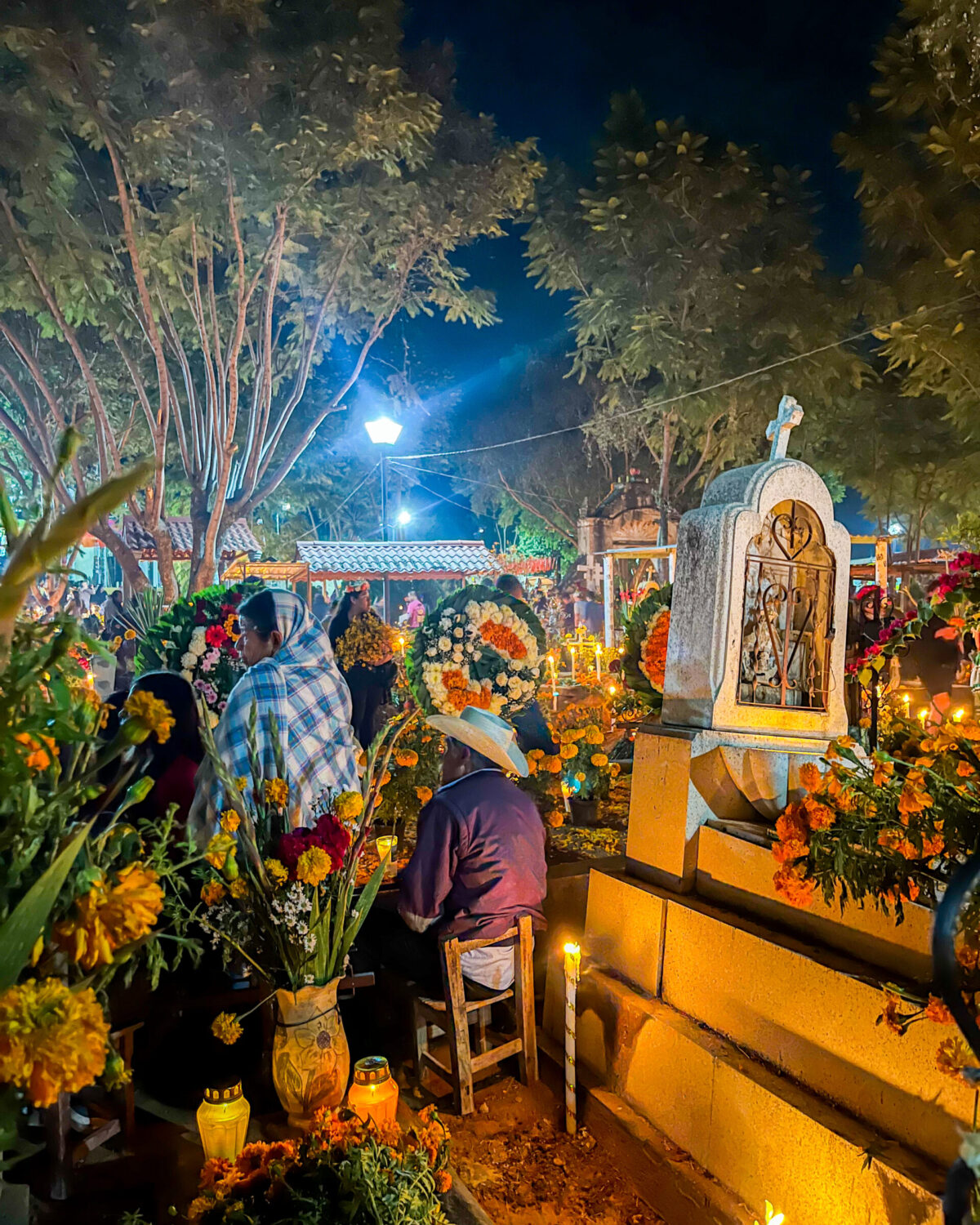
Atzompa Cemetery, Oaxaca
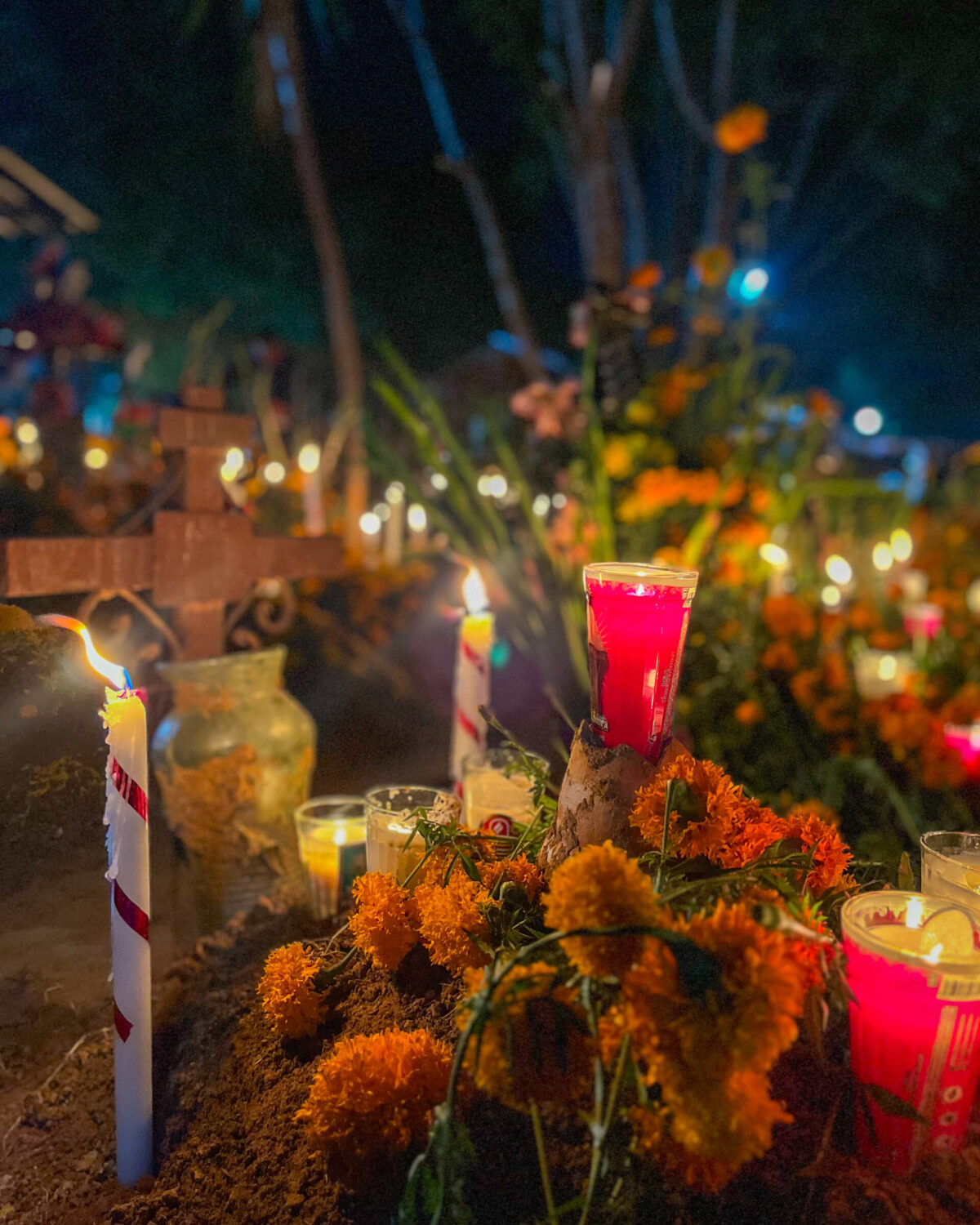
Atzompa Cemetery, Oaxaca
Final Thoughts on Día de Muertos in Oaxaca
Dia de Muertos is a reminder of how deeply life and death are intertwined, and how memory keeps loved ones alive long after they’ve passed. In Oaxaca, Día de Muertos altars, traditional rituals, and cemetery gatherings invite visitors to connect with the past, while the music, local food, and cultural traditions celebrate the joy of the present.
If you choose to experience Day of the Dead celebrations in Oaxaca, do so with an open heart, curiosity, and respect. Whether you join a family of artisans in Atzompa, explore the weaving traditions in Teotitlán del Valle, or dance in the lively muerteada of Etla, each experience offers an authentic Día de Muertos celebration in Oaxaca, honoring ancestors and the cycle of life and death.
Plan your trip: A quick guide to book your next adventure nowThis is a detailed guide that will help you plan your trip from scratch and successfully prepare everything ahead of your departure. I follow these steps to book my trips and now you can do the exact same! Purchase your flightI use Skyscanner to book my flights since I can have oversight on the best deals. Alternatively, I use Kiwi.com Book your accommodationFor many years now I’ve used Booking.com to find the best hotel deals. Hostelworld is my go-to for hostels. Don’t forget your travel insuranceMy favorite companies are SafetyWing (best relation product/value), HeyMondo (another great affordable alternative), and IATI Seguros (for Spanish speakers). Choose your toursI love traveling on my own, but for those activities that I need to pre-book I use Get Your Guide, Viator, and Civitatis. Need Transportation?Discover Cars, is the company that works best to rent a car. For transportation in Central America, I use GuateGo. Packing GuideCheck out the list I’ve put together with my favorite travel gear and travel resources to help you pack for your trip.
|
LIKE THIS POST? PIN AND SAFE FOR LATER